




Computer-Aided Design (CAD) has transformed the way products, machines, structures, and manufacturing systems are designed. What began as a digital replacement for traditional drafting boards has evolved into a powerful engineering ecosystem that connects design, simulation, manufacturing, collaboration, and automation.
Today, CAD software is at the center of product development across industries ranging from automotive and aerospace to industrial machinery, consumer products, and construction.
Life Before CAD
Before the introduction of CAD software, engineers and designers relied entirely on manual drafting techniques.
Large drawing boards, pencils, scales, templates, and physical models were essential tools for product development.
Design changes often required entire drawings to be recreated, resulting in:
Long development cycles
Increased engineering effort
Documentation errors
Difficult revision management
Limited collaboration
As products became more complex, manufacturers needed a more efficient solution.
The Birth of Computer-Aided Design
The first CAD systems emerged during the 1960s and 1970s, primarily within aerospace, automotive, and government research organizations.
These early systems introduced digital drafting capabilities, allowing engineers to create and modify technical drawings using computers.
Although expensive and limited to large organizations, they demonstrated the potential of digital engineering.
For the first time, designs could be stored electronically, revised quickly, and reproduced accurately.
The Rise of 2D CAD
During the 1980s and early 1990s, CAD technology became more accessible.
2D CAD software replaced traditional drafting boards and became the industry standard for engineering documentation.
Key benefits included:
Faster drawing creation
Improved drafting accuracy
Easier revisions
Digital storage and sharing
Better engineering documentation
For many organizations, 2D CAD represented the first major step toward digital transformation.
The 3D CAD Revolution
While 2D CAD improved drafting productivity, engineers still worked primarily with drawings rather than products.
The introduction of 3D CAD fundamentally changed this approach.
Instead of creating multiple views of a design, engineers could now build complete digital models representing actual products.
This enabled:
Better visualization
Improved design accuracy
Faster modifications
Design reuse
Reduced development cycles
Enhanced collaboration
3D modelling quickly became the foundation of modern product development.
Parametric Design Changes Everything
One of the most significant advancements in CAD history was the introduction of parametric modelling.
Engineers could define dimensions, relationships, constraints, and design intent directly within a model.
When changes were required, the software automatically updated related features, assemblies, and drawings.
This transformed engineering productivity by allowing:
Rapid design iterations
Product family development
Configuration management
Automated documentation
Improved design consistency
Parametric modelling remains the backbone of modern mechanical CAD systems.
Beyond Design: CAD Meets Manufacturing
As manufacturing became increasingly digital, CAD software evolved beyond design.
Modern CAD platforms began incorporating:
Sheet metal design
Structural design
Weldment design
Bills of materials
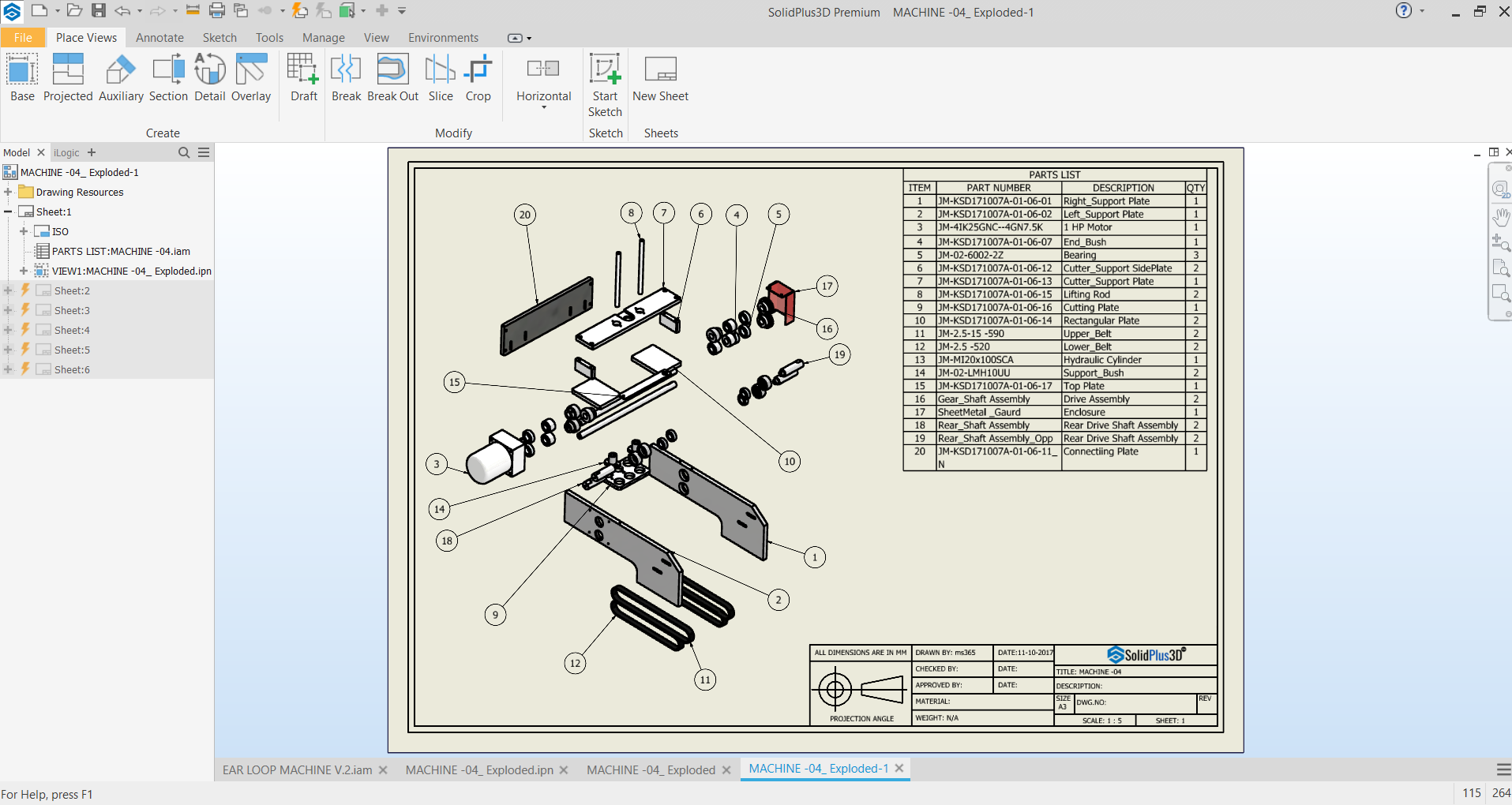
Manufacturing drawings
CAM integration
CNC preparation
Product data management
Engineering teams could now move seamlessly from concept to production within a connected environment.
Simulation Becomes Integrated
Another major milestone was the integration of simulation technologies into CAD platforms.
Engineers gained the ability to perform:
Structural analysis
Stress calculations
Thermal studies
Motion simulation
Design validation
This reduced dependence on physical prototypes and allowed engineers to optimize designs much earlier in the development process.
Simulation became an essential component of digital product development.
The Era of Collaboration and Data Management
As engineering teams became more distributed, collaboration emerged as a critical requirement.
Modern CAD ecosystems introduced:
Product Data Management (PDM)
Revision control
Design collaboration
Workflow management
Supplier communication
Multi-site engineering support
CAD software evolved from an individual design tool into a collaborative business platform.
Design Automation and Industry-Specific Solutions
Today, engineering organizations expect CAD systems to do much more than create geometry.
Modern platforms support:
Design automation
Rule-based engineering
Automated drawing generation
BOM automation
ERP integration
Industry-specific workflows
CAD customization
These capabilities help organizations reduce repetitive work and improve engineering efficiency.
The Future of CAD Software
The next generation of CAD software is being shaped by several emerging technologies:
Artificial Intelligence (AI)
Cloud collaboration
Digital twins
Generative design
Advanced simulation
Engineering automation
Connected manufacturing
Future CAD systems will increasingly assist engineers by automating routine tasks, providing design recommendations, and integrating seamlessly with manufacturing and business systems.
Rather than simply creating models, CAD platforms will become intelligent engineering environments that support the entire product lifecycle.
Conclusion
The evolution of CAD software mirrors the evolution of engineering itself. From manual drafting boards to intelligent digital engineering platforms, CAD has continuously transformed the way products are designed, validated, manufactured, and managed.
As technology continues to advance, CAD software will remain the foundation of innovation across engineering and manufacturing industries, helping organizations develop better products faster, more efficiently, and with greater confidence than ever before.


Leave a Reply