



In today’s competitive engineering and manufacturing environment, designing a product that simply works is no longer enough. Products must be lighter, stronger, safer, more reliable, and cost-effective—all while reaching the market faster than ever before.
Meeting these expectations requires engineers to understand how products will behave under real-world conditions before they are manufactured. This is where Finite Element Analysis (FEA) has become an essential part of modern product development.
What is Finite Element Analysis (FEA)?
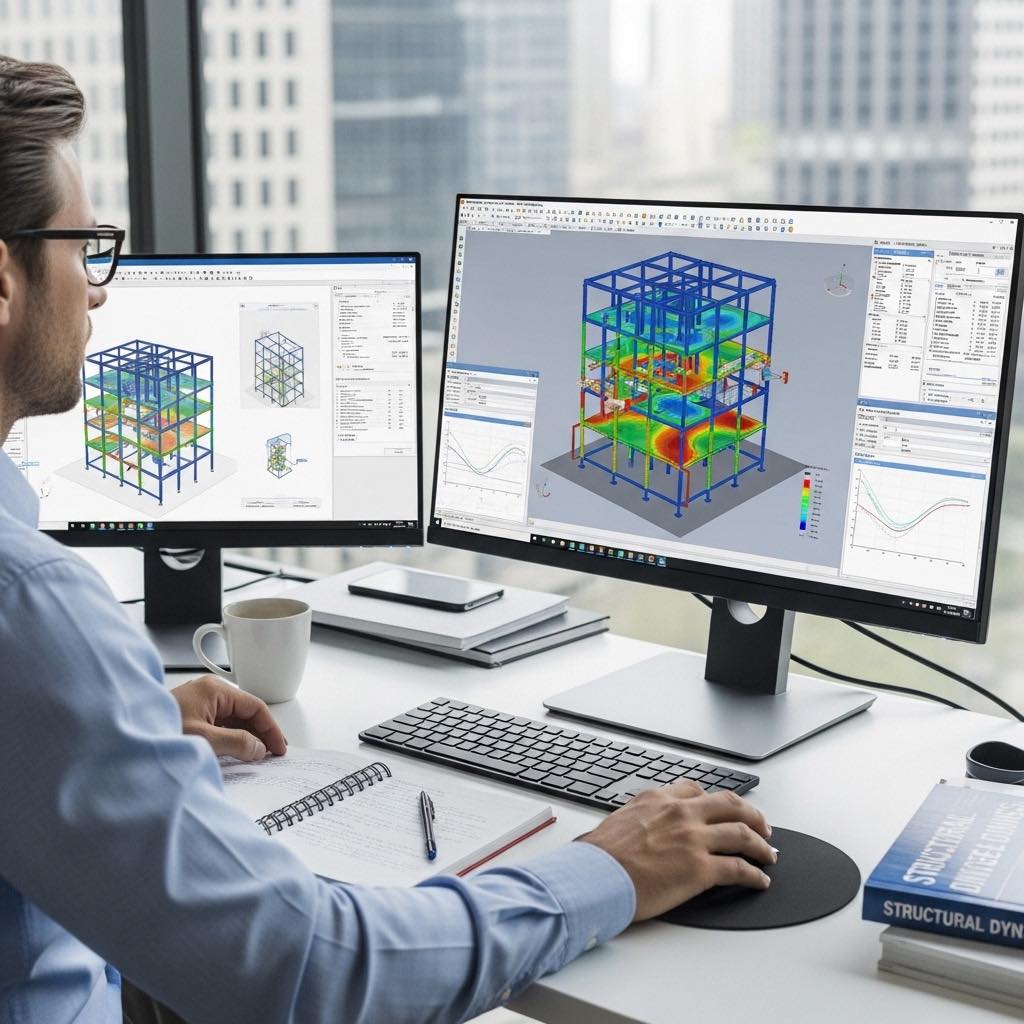
Finite Element Analysis (FEA) is a computer-based simulation technique used to predict how a product or structure will respond to various physical conditions.
Engineers can evaluate:
Stress and strain
Deformation and displacement
Structural performance
Thermal behavior
Load distribution
Safety factors
By analyzing a virtual model, engineers gain valuable insights into product performance long before physical prototypes are built.
The Challenge of Traditional Product Development
Historically, product validation relied heavily on physical prototyping and testing.
The typical process involved:
Designing the product
Manufacturing a prototype
Testing performance
Identifying failures
Modifying the design
Building another prototype
This cycle often repeated multiple times, resulting in:
Increased development costs
Longer project timelines
Delayed product launches
Higher material consumption
Greater engineering effort
As products became more complex, this approach became increasingly expensive and inefficient.
How FEA Changes the Design Process
FEA enables engineers to evaluate product performance digitally before manufacturing begins.
Instead of relying solely on physical testing, engineers can:
Simulate operating conditions
Predict potential failures
Optimize designs
Compare alternatives
Validate design decisions
This allows issues to be identified and corrected much earlier in the development process.
Reduce Product Failures
One of the primary reasons organizations adopt FEA is to reduce the risk of product failure.
FEA helps engineers identify:
High-stress regions
Weak structural areas
Excessive deformation
Material overloading
Potential fatigue concerns
Detecting these issues early prevents costly failures during production or field operation.
Reduce Physical Prototyping Costs
Physical prototypes are expensive to build and test.
By using simulation during the design phase, organizations can:
Minimize prototype iterations
Reduce material waste
Lower testing costs
Accelerate development cycles
Many companies now use FEA to validate multiple design concepts virtually before committing to physical prototypes.
Optimize Product Performance
FEA is not only used to identify problems—it is also a powerful optimization tool.
Engineers can evaluate different:
Materials
Thicknesses
Geometries
Load conditions
Design configurations
This enables the creation of products that are both stronger and more efficient.
For manufacturers, optimization often translates into lower material costs and improved product performance.
Improve Product Safety and Reliability
Safety is critical in industries such as:
Industrial machinery
Automotive
Structural engineering
Process equipment
Consumer products
Material handling systems
FEA helps engineers ensure products can safely withstand expected operating conditions while maintaining required safety margins.
This improves customer confidence and reduces warranty-related issues.
Support Faster Innovation
As markets become more competitive, engineering teams are expected to deliver innovation more quickly.
FEA enables faster decision-making by providing engineers with immediate feedback on design performance.
Instead of waiting weeks for prototype testing, simulation results can often be generated within hours.
This accelerates product development and allows organizations to bring new products to market faster.
Common Applications of FEA
Today, FEA is used across virtually every engineering industry.
Typical applications include:
Machine frames
Structural assemblies
Pressure vessels
Sheet metal components
Welded structures
Industrial equipment
Automotive components
Consumer products
Support structures
Any product subjected to loads, forces, or temperature variations can benefit from simulation-driven validation.
Integrated Simulation with Modern CAD
Modern engineering platforms increasingly integrate CAD and simulation workflows.
Solutions such as SolvePlus3D enable engineers to perform:
Linear static analysis
Thermal analysis
Design validation
Structural performance evaluation
Directly on CAD models without complex data transfers.
This integration improves efficiency and encourages simulation-driven design practices.
The Future of Engineering is Simulation-Driven
The most successful engineering organizations are shifting toward simulation-driven product development.
Rather than validating designs after completion, simulation is now used throughout the design process to guide decisions from the earliest stages.
This approach leads to:
Better products
Lower costs
Reduced risk
Faster development
Improved competitiveness
As digital engineering continues to evolve, simulation will become an even more critical component of product development.
Conclusion
Finite Element Analysis is no longer a specialized tool used only by large enterprises. It has become a fundamental engineering capability that helps organizations design safer, stronger, and more reliable products while reducing development costs and accelerating innovation.
By enabling engineers to validate and optimize designs before manufacturing begins, FEA transforms product development from a trial-and-error process into a predictable, data-driven engineering workflow.
For companies looking to improve product quality, reduce risk, and accelerate time-to-market, FEA is not just valuable—it is essential.


Leave a Reply