




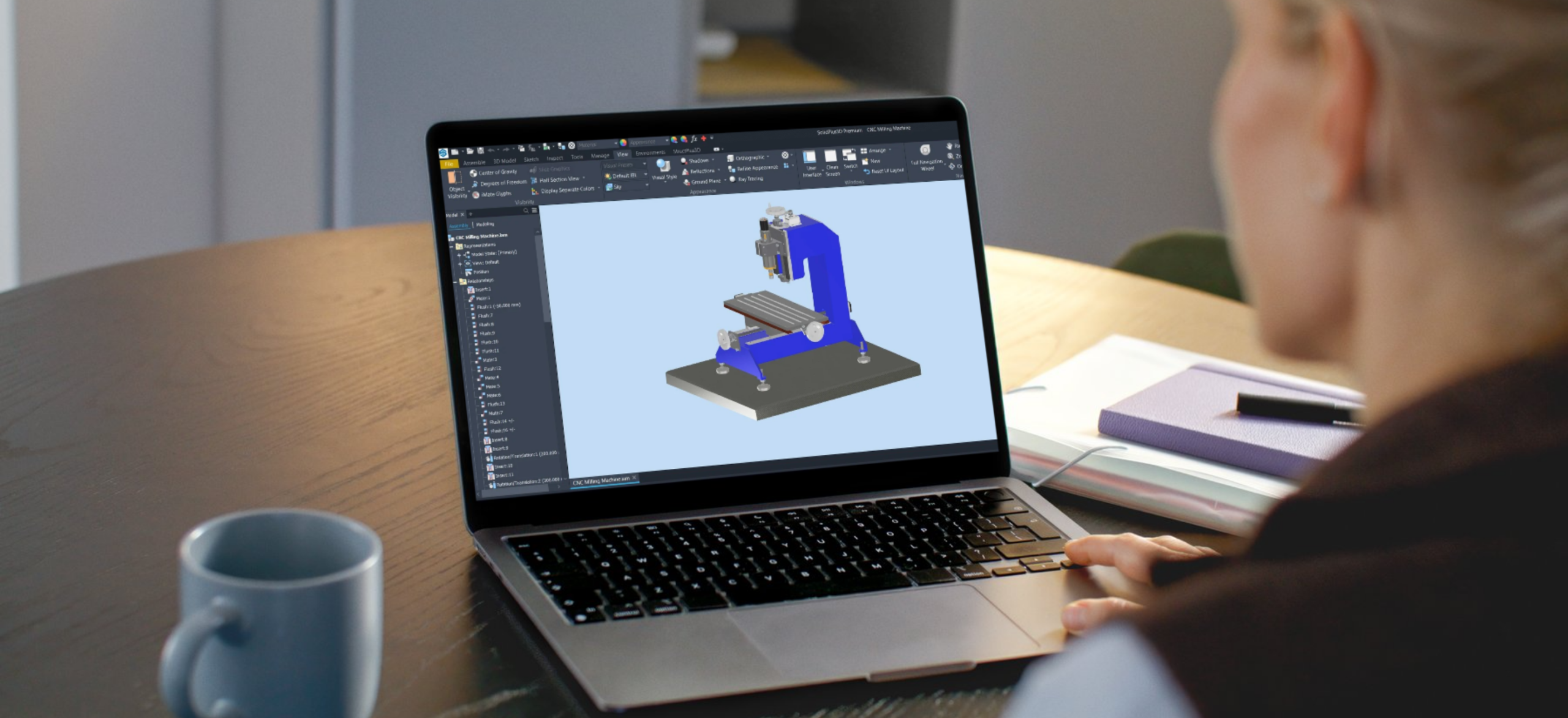
The way products are designed and manufactured has transformed dramatically over the past few decades. What once relied on paper drawings, physical prototypes, and manual calculations has evolved into a highly digital and intelligent process powered by 3D Computer-Aided Design (CAD).
Today, 3D CAD sits at the heart of modern product development, helping engineers and manufacturers design better products, reduce development costs, and accelerate time to market.
The Era of Manual Drafting
Before CAD systems emerged, engineers created products using drawing boards, drafting tools, and physical models. Every design modification required manual updates to multiple drawings, making the process slow, labor-intensive, and prone to errors.
Complex products often required numerous iterations, resulting in extended development cycles and increased manufacturing costs.
The Rise of 2D CAD
The introduction of computer-aided drafting in the 1980s revolutionized engineering design. Software tools replaced traditional drafting boards, allowing engineers to create and modify technical drawings digitally.
2D CAD significantly improved productivity by:
- Reducing drafting time
- Improving drawing accuracy
- Simplifying revisions
- Enhancing documentation consistency
- Enabling digital storage and sharing
While a major advancement, 2D CAD still represented products as collections of drawings rather than intelligent digital models.
The Shift to 3D Parametric Design
The next major breakthrough came with parametric 3D CAD systems. Instead of creating multiple disconnected drawings, engineers could build intelligent 3D models containing dimensions, relationships, and design intent.
This transformed the design process by enabling:
- Faster design iterations
- Automated drawing generation
- Design reuse and standardization
- Improved collaboration across teams
- Better visualization of products before manufacturing
Parametric modelling became the foundation of modern product development, allowing companies to innovate faster while maintaining engineering accuracy.
Integrating Design and Manufacturing
As manufacturing technologies advanced, CAD systems evolved beyond design tools into complete engineering platforms.
Modern 3D CAD solutions now support:
- Sheet metal design
- Structural design
- Assembly management
- Manufacturing drawings
- Bills of materials (BOM)
- Product data management
- CNC and CAM integration
- Design automation
By connecting design and manufacturing workflows, organizations can reduce errors, improve production readiness, and streamline communication between engineering and the shop floor.
The Role of Simulation and Validation
The introduction of integrated simulation tools further changed product development.
Engineers can now perform:
- Structural analysis
- Stress and deformation studies
- Thermal simulations
- Design optimization
- Performance validation
Instead of relying solely on physical prototypes, manufacturers can evaluate product performance virtually, reducing development costs and accelerating innovation.
The Digital Manufacturing Era
Today, 3D CAD plays a central role in digital transformation initiatives across manufacturing industries.
Modern engineering organizations use CAD as the foundation for:
- Digital product development
- Collaborative engineering
- Smart manufacturing
- Digital twins
- Automated workflows
- Connected engineering ecosystems
Design data now flows seamlessly between engineering, manufacturing, procurement, quality, and supply chain teams.
What the Future Holds
The future of 3D CAD is being shaped by automation, artificial intelligence, cloud collaboration, and integrated engineering platforms.
Future CAD systems will increasingly provide:
- AI-assisted design recommendations
- Automated engineering workflows
- Intelligent manufacturing planning
- Real-time collaboration
- Advanced simulation integration
- Industry-specific design automation
As products become more complex and development timelines continue to shrink, 3D CAD will remain one of the most important technologies driving engineering innovation.
Conclusion
From manual drafting boards to intelligent digital engineering platforms, the evolution of 3D CAD has fundamentally transformed the product design and manufacturing industry. Organizations that embrace modern CAD technologies are better positioned to improve productivity, reduce costs, enhance product quality, and accelerate innovation.
As engineering and manufacturing continue to evolve, 3D CAD will remain the foundation upon which the next generation of products is designed, validated, and manufactured.


Leave a Reply